
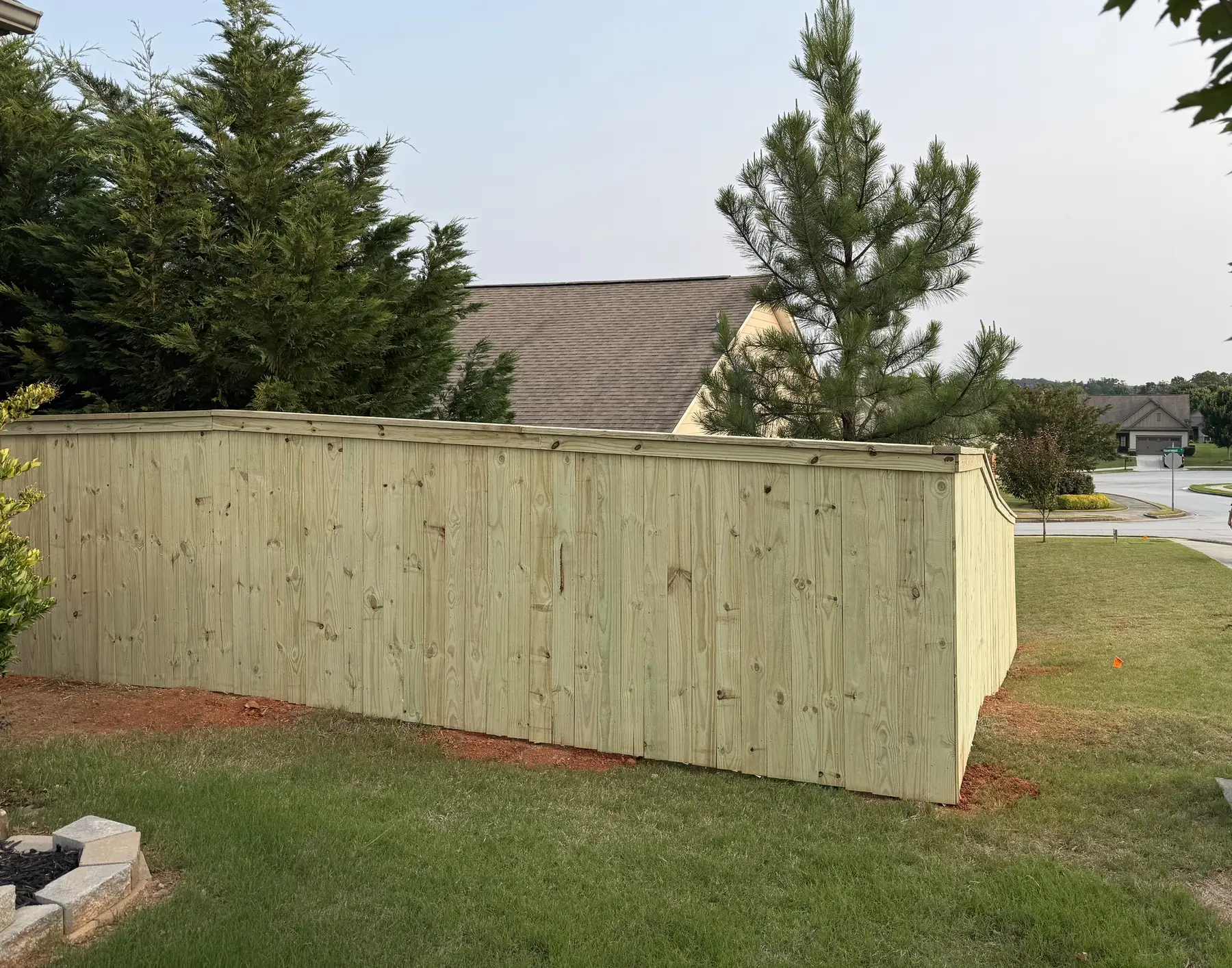
A new fence is exciting, and it’s tempting to jump straight to picking a style. But a little homework up front can save you from the worst-case scenario: having to move or remove a brand-new fence because it didn’t meet a rule you didn’t know about.
Here’s what homeowners in Cumming and the rest of Forsyth County should check before building. Rules change and vary by address, so treat this as a checklist of questions to ask, not a final answer. Your local planning or building department and your HOA have the final word.
Step 1: Figure out which rules apply to your address
One of the most common mix-ups we see is assuming every “Cumming” address follows the same rules. Many homes with a Cumming mailing address are actually in unincorporated Forsyth County, not inside the City of Cumming limits. The city and the county each have their own zoning and permitting processes.
To find out which applies to you:
- Check your property tax record or the county’s online parcel map
- Call the City of Cumming or Forsyth County planning and zoning office and ask
The same idea applies if you live in Hall, Fulton, or Fayette County, or in a city like Gainesville, Alpharetta, Roswell, Suwanee, Buford, or Sugar Hill.
Step 2: Ask about permits and zoning limits
Whether a residential fence needs a permit depends on your jurisdiction and the type of fence. Even where a permit isn’t required, zoning rules may still apply. Questions worth asking:
- Is a permit required for a residential fence of the height and type I want?
- What is the maximum height in the front yard, side yard, and backyard?
- Are there setback rules from the property line, sidewalk, or road?
- Are there sight-distance rules for corner lots or near driveways, so drivers can see around the fence?
- Do pool fences have separate requirements or inspections? (See our guide to pool fence requirements in Georgia.)
Write down who you spoke with and what they said, or better yet, get it in writing.
Step 3: Get HOA approval (if you have an HOA)
Most newer subdivisions around Cumming have a homeowners association, and many HOAs require written approval before you install a fence. HOA guidelines often cover:
- Material (for example, wood, aluminum, or vinyl only)
- Style and color (such as black aluminum or a specific stain color)
- Height, often different for front, side, and rear yards
- Placement, such as how far back from the front corner of the house the fence must start
- Which side faces out (many HOAs require the finished side to face neighbors or the street)
The approval process usually involves submitting a form, a drawing or plat showing the fence line, and details about the material and height. Approval can take anywhere from a few days to several weeks depending on how often the architectural committee meets, so start early.
Building without required HOA approval can lead to fines or a requirement to change or remove the fence. It’s not worth the risk.
Step 4: Know your property lines and easements
A fence should sit on your property, and it’s your responsibility to know where that is. Helpful resources:
- Your plat or survey, often included in your closing documents
- Property pins at the corners of the lot, if you can find them
- A new survey if the lines are unclear or you’re building right on the line
Also look for easements on your plat. Utility and drainage easements may limit what you can build or require access for maintenance. If a fence crosses a drainage swale, it needs to be designed so it doesn’t block water flow.
It’s also good practice, and good manners, to talk with your neighbors before building along a shared line.
Step 5: Locate underground utilities before digging
Georgia law requires that underground utilities be marked before digging. Georgia 811 (call 811 or submit a request online) coordinates locates for the member utilities. Allow a few business days for the marks to be made before digging starts. Keep in mind that private lines, such as irrigation, landscape lighting, or a line to a detached building, usually aren’t marked by 811.
If you’re hiring a fence contractor, ask who will submit the 811 request; we’ll confirm that with you during your estimate. Either way, let your installer know about any private lines on the property.
How long does all this take?
For many homeowners, the process looks like this:
- Get a free estimate with your fence line, material, and height
- Submit to your HOA (if required) and wait for approval
- Pull a permit (if required)
- Utilities are marked through Georgia 811
- Installation, which takes 1 to 2 days for most residential fences
The paperwork often takes longer than the installation itself, so it pays to start early, especially in spring when HOA committees and fence crews are busiest.
We’ll help you get it right
We’re based in Cumming and regularly build fences in Forsyth County neighborhoods. During your free estimate, we’ll measure your yard, give you a written quote with the material, height, and footage details your HOA application will ask for, and talk through any height or placement questions. Whether you’re in Cumming, Gainesville, North Fulton, or Peachtree City, we’re happy to help. Explore our wood, vinyl, aluminum, and chain link fence options.
Ready to talk about your fence?
We offer free, no-obligation on-site estimates in Cumming, Gainesville, Peachtree City, and the surrounding areas.
Get a Free Quote (678) 490-6359