
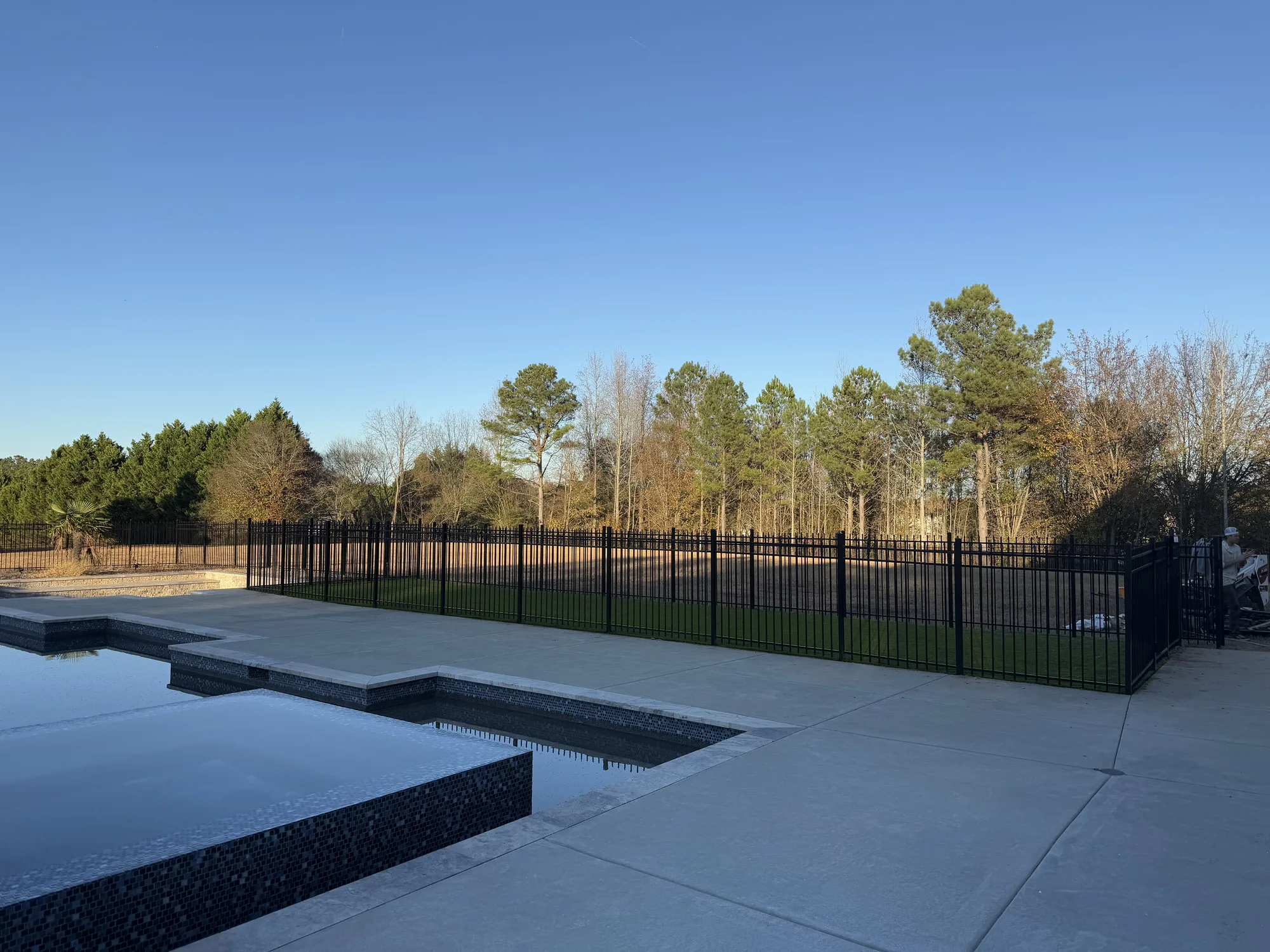
A pool is one of the best additions you can make to a Georgia backyard, and a good fence is one of the most important parts of it. Pool barriers protect children, pets, and visitors, and in many places they’re required before a new pool can pass final inspection.
This guide explains the general ideas behind pool fence requirements and the features inspectors commonly look for. It is not legal advice, and it is not a substitute for your local code. Requirements are set and enforced by your city or county, and they change over time. Always confirm the current rules with your local building department, and check your HOA guidelines, before you build.
Who sets pool fence rules in Georgia?
In Georgia, building codes are adopted at the state level and enforced locally. Many jurisdictions base their residential pool barrier requirements on widely used model codes, such as the International Residential Code and the International Swimming Pool and Spa Code, sometimes with local amendments.
In practice, that means:
- Your city or county building department decides what’s required for your property and whether a permit and inspection are needed.
- Your HOA may add its own rules about fence style, color, and height.
- Your homeowner’s insurance company may have its own expectations for pools, so it’s worth a call.
If you live in the City of Cumming, your rules may differ from someone in unincorporated Forsyth County. The same is true in Hall, Fulton, and Fayette Counties. Start by finding out which jurisdiction your address falls under.
Features pool barriers commonly require
While the exact numbers vary, pool barrier rules based on the model codes tend to focus on the same ideas. Ask your local building department how each of these applies to you:
- Minimum height. Pool barriers usually have a minimum height measured from the ground on the outside of the fence. Many codes use 4 feet as a baseline, but confirm your local requirement.
- Limited gaps. Openings between pickets and the gap at the bottom of the fence are usually limited so a small child can’t squeeze through or under.
- No easy footholds. Horizontal rails and decorative elements can act like a ladder. Codes often regulate where horizontal members can be placed on the outside of the fence.
- Self-closing, self-latching gates. Pool gates commonly must close and latch on their own, open outward away from the pool, and have the latch mounted high enough to be out of a young child’s reach.
- Doors from the house. If the house forms part of the barrier, there may be requirements for door alarms, self-closing doors, or other protections.
- Clear zone around the fence. Keep furniture, planters, equipment, and trees from creating a way to climb over the fence.
Again, these are general themes, not specific code requirements. Your inspector’s interpretation of your local code is what counts.
Choosing a pool fence material
The best pool fence meets your local requirements, fits your HOA, and looks good from your patio.
- Aluminum is the most popular choice around pools in our area. It resists rust, needs very little upkeep, and keeps sightlines open so you can see the pool from the house. Many aluminum styles are specifically designed for pool use, with tight picket spacing and compatible self-closing hardware. See our aluminum fence installation page.
- Vinyl can work well as a pool barrier, especially when privacy is also a goal. Make sure the style you choose meets climbability and gap requirements. Learn more about vinyl fences.
- Wood privacy fences can also serve as pool barriers if they meet local requirements, though they need regular staining to hold up around water and sun. See wood fences.
- Chain link may be allowed in some places, but the mesh size and climbability need careful attention.
Plan the gates first
Gates are where most pool fence problems happen. Think about:
- Where you’ll carry chairs, coolers, and pool equipment in and out
- Whether you need a wider gate for maintenance access
- Self-closing hinges and self-latching hardware that are rated for the gate size
- Keeping the latch side away from anything a child could climb
A gate that sags, drags, or doesn’t latch every time isn’t doing its job. Quality hardware and solid gate posts are worth it.
Timing your pool fence with the pool build
If you’re building a new pool, talk to your pool builder early about who handles the fence and when. Final inspection often requires the barrier to be complete, so coordinate the schedule. If the fence also has to tie into a retaining wall or a slope, it helps to plan that layout before the landscaping is finished.
Checklist before you build
- Confirm your jurisdiction (city vs. county) and call its building department
- Ask whether a permit and inspection are required for the fence
- Get your HOA’s written fence guidelines and submit for approval if required
- Confirm your property lines and any easements
- Pick a fence style and gate hardware that meet the requirements
- Have utilities located before any digging (Georgia 811)
How we help
We build aluminum, vinyl, and wood pool fences across Cumming, Gainesville, North Fulton, and Peachtree City. During your free estimate, we’ll talk through gate placement, hardware, and your HOA’s rules, and we’ll recommend you confirm the final requirements with your local building department so there are no surprises at inspection.
Ready to talk about your fence?
We offer free, no-obligation on-site estimates in Cumming, Gainesville, Peachtree City, and the surrounding areas.
Get a Free Quote (678) 490-6359